Most people consume enormous amounts of information every day: articles, videos, podcasts, tutorials, tweets, and random ideas at 1:14 AM. And then… it disappears.
Not because the information was bad. Because the human brain is terrible at storing disconnected information without a system.
The life hack isn’t “learn more.” It’s this: Build an external memory system.
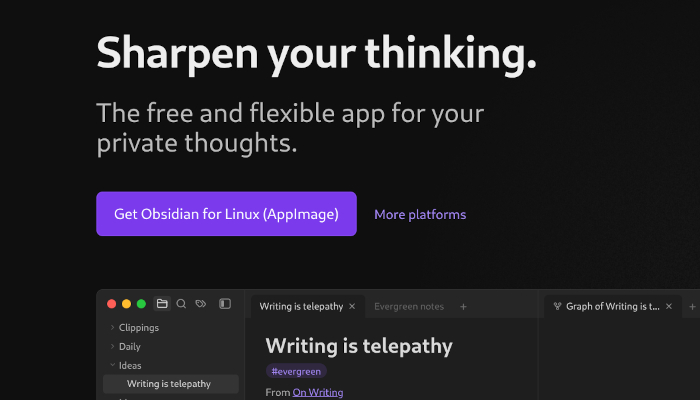
Surprisingly, one of the best free tools for this is Obsidian.
Why This Feels Like a Superpower
Most note-taking apps are just storage boxes. You dump information into them and never see it again. Obsidian works differently.
It lets you connect ideas together like a web of thoughts. Instead of isolated notes, you build a living map of your brain. A note about psychology can connect to:
- A business idea
- A quote from a book
- A personal experience
- A productivity technique
- A future project
Over time, your notes start generating new ideas automatically. You stop “collecting information” and start compounding knowledge.
The Unusual Trick: Don’t Take Notes on Everything
Most people fail at knowledge systems because they save too much. The real hack is selective capture.
Instead of storing entire articles, save only:
- Surprising ideas
- Things that changed your perspective
- Patterns you notice repeatedly
- Insights you want your future self to rediscover
Your second brain should not become a digital junk drawer. It should become a curated museum of useful thoughts.
The “Idea Collision” Effect
Imagine saving a quote about attention, a business strategy, a psychology insight, and a writing technique. Individually, they’re random.
But later, while solving a problem, your brain connects them. That connection creates something original. This is how many creative breakthroughs actually happen: not from genius, but from unexpected combinations.
The Real Life Hack: Reduce Thinking Friction
The best systems remove friction. With Obsidian, you can instantly save notes, create quick idea pages, and search your entire knowledge base instantly.
The easier capturing becomes, the more valuable thoughts survive. Tiny insights stop evaporating.
A Surprisingly Powerful Setup
Here’s a minimalist setup that works shockingly well:
| Folder | Content |
|---|---|
| Folder 1 — Ideas | Random thoughts, observations, concepts. |
| Folder 2 — Lessons | Things learned from books, videos, failures, conversations. |
| Folder 3 — Projects | Anything actively being built. |
| Folder 4 — Mental Models | Frameworks for decision-making and problem-solving. |
Simple systems survive. Most people overcomplicate systems and abandon them.
The Secret Advantage Nobody Talks About
When your brain trusts that ideas are safely stored, it becomes calmer and more creative. You stop mentally juggling unfinished thoughts.
Your mind becomes freer because it no longer acts as a fragile storage device.
Combine It With a Read-Later Tool
This becomes even more powerful when paired with free apps like Instapaper, Matter, or Raindrop.io. These tools save content for highlighting, which can then be connected directly with Obsidian for a seamless “save → think → connect” workflow.
The 5-Minute Daily Habit
- Save one interesting idea.
- Write one sentence about why it matters.
- Link it to another note.
Five minutes daily compounds into hundreds of connected insights yearly.
Why This Is an Actual Modern Superpower
The people who advance fastest today are often not the smartest. They are the people who organize knowledge well, retrieve ideas quickly, and connect concepts creatively.
In the internet era, memory is leverage. Building a “second brain” is one of the highest-return free life hacks available online.